
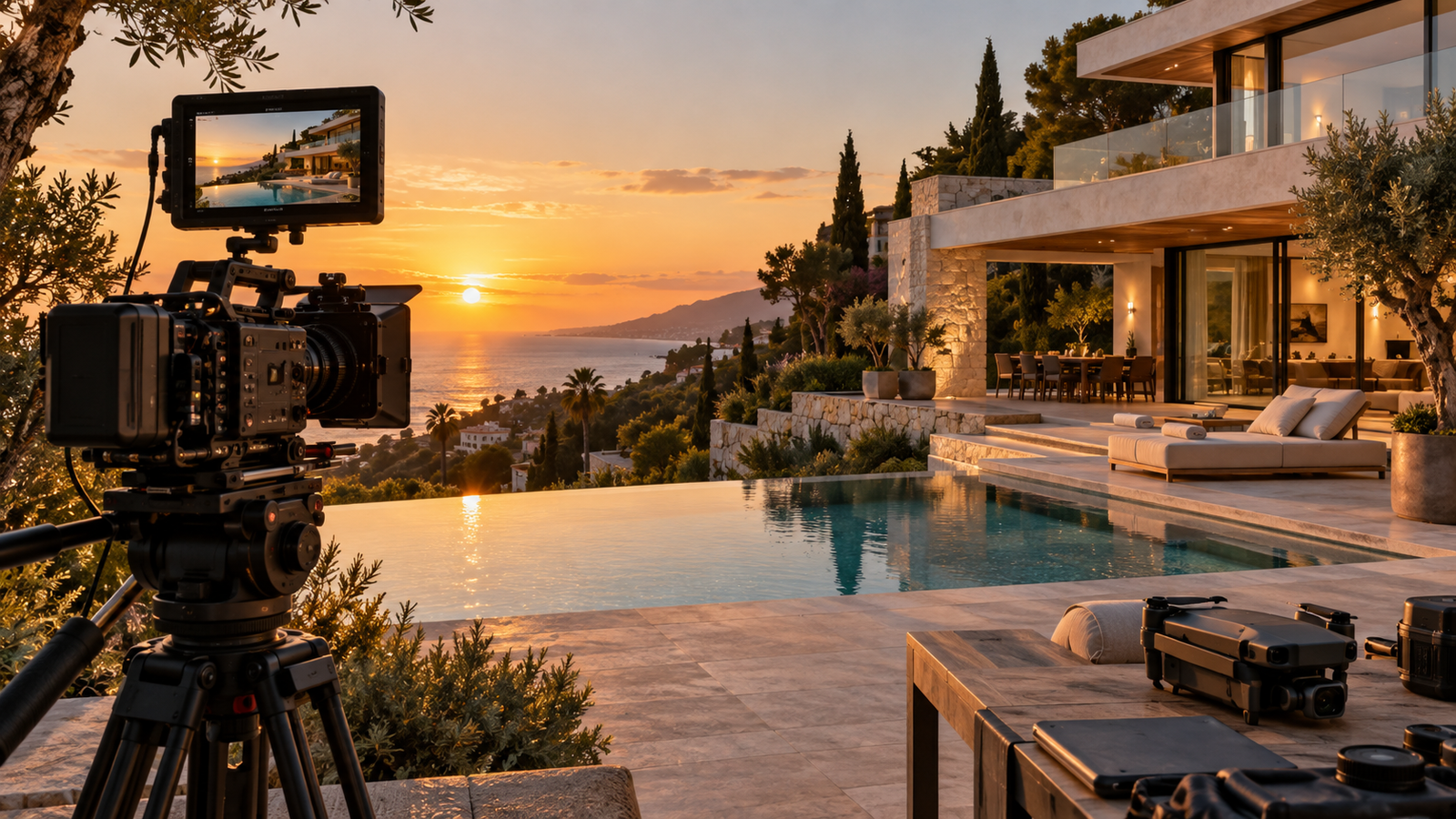
An extraordinary property can look ordinary if the production does not understand its architecture, its light, and the buyer it must attract. Photographing square meters is not the same as building a commercial presentation capable of justifying a visit.
01
Start with the commercial objective of the property
A villa looking for an international buyer, an off-plan development, and a property intended for vacation rental are not presented in the same way. Define your audience, sales stage, differential attributes, and expected action before deciding on cameras or floor plans.
Interview the agent and the owner: what objections arise, which areas surprise during the visit, what real estate portals do not explain well, and what lifestyle the location allows. That information must drive the narrative.
Order the deliverables by commercial priority. The hero piece creates perception; the portal photography allows comparison; the vertical clips generate discovery; the private material helps the agent continue a conversation.
TWO DIFFERENT PRODUCTIONS
A renovated family villa needs to explain layout, garden, privacy, and daily life. A penthouse for a second home can focus on views, access, amenities, and its connection to Marbella. The property doesn't dictate the story alone: the buyer does too.
02
Production starts before turning on the camera
Create a brief with buyer, promise, decisive attributes, material uses, and agency tone. From there, the journey, lighting time, styling, talent, and shot list are built.
Visit or study the location beforehand. Orientation, reflections, views, traffic, construction work, access, dimensions, and solar movement can completely change the plan. A generic list discovered on the day of the shoot produces acceptable but interchangeable material.
Coordinates cleaning, gardening, pool maintenance, lighting, textiles, furniture, vehicles, and personal items. In the high-end segment, a visible trash can or a poorly made bed can lower perception more than a better camera can raise it.
03
The photograph must explain space and value with honesty
Perspective, verticals, color temperature, and exposure help understand architecture and scale. Alternate master images that establish each room with medium shots and details that reveal materials, finishes, and character.
The goal is not to make a room look twice as large. An extreme wide-angle lens creates an expectation that is broken during a visit. Editing must correct technical limitations without inventing light, views, or spaciousness.
Select fewer images but more distinct ones. Ten nearly identical variations slow down the decision; an ordered sequence makes it possible to understand the arrival, social areas, bedrooms, exterior, amenities, and surroundings.
04
The video turns distribution into an experience
A tour must have a narrative intent, not be a continuous stroll. Opening, revelation, transitions, moments of life, and closing guide attention and allow us to understand how spaces are connected.
The camera movement must respond to the architecture. Tracking shots, fixed shots, ambient sound, and human presence provide scale when used with judgment; a succession of rapid movements can hide precisely what the buyer needs to examine.
Plan horizontal and vertical versions right from the shoot. A web piece, a Reel, an ad, and a private message do not need the same duration, opening, or call to action.
05
The drone provides context when context sells
Views, plot, access, privacy, topography, and relationship with the sea can be decisive. Start with the question that the floor plan must answer: where the house is, what it overlooks from its position, or how the estate is organized.
Not every property needs a drone, nor does every flight need to go to maximum height. Low, controlled movements can explain gardens and architecture better than a generic aerial view of the neighborhood.
Check regulations, flight zone, privacy, weather, and safety before producing. If it cannot be operated legally and in a controlled manner, replace the asset with elevated photography, maps, or an environmental narrative.
06
The lifestyle works when it brings scale and meaning
People, gastronomy, sports, or automobiles can help the buyer imagine life in the property, but they shouldn't turn the home into a cliché-filled advertisement.
Select scenes linked to real spaces: breakfast on a terrace, indoor-outdoor transition, arrival at or use of a wellness area. Casting, wardrobe, and direction must correspond to the positioning and the market without caricaturing it.
When there is no talent, small signs of life —lights turned on, open doors, a prepared table— can bring warmth while preserving the architectural prominence.
07
Design a version for each discovery point
The portal needs order and precision; the web can go deeper; the ad must stop and qualify; social media builds desire; and the agent needs materials that work in a private conversation.
Cropping the same video for all channels is not a strategy. Keep the core idea and rewrite the opening, pacing, duration, framing, subtitles, and call to action according to the context.
Deliver the material named and organized by use. If the sales team cannot find a vertical version, a cover, or five priority photographs, they will end up publishing incorrect assets even if the production is excellent.
08
Clarify rights, privacy, and material lifespan
Specify in writing media, territories, duration, paid campaigns, portals, transfer to collaborators, and use by the agent or promoter. Music, talent, locations, and artistic elements may have different licenses.
Agree on what happens if the property is withdrawn, changes agencies, or is sold. Keep master copies and final versions with a clear archiving policy, especially when the material is part of corporate communication.
09
What a complete real estate production should include
The deliverable must not be decided at the end. Before filming, agree on principal photography, details, hero video, walkthrough, vertical versions, ad clips, covers, and agent materials. Define resolution, duration, music, subtitles, and usage rights.
Prepare a production sheet with spaces, schedule, expected light, styling, talent if any, restrictions, and responsible person. Reserve a margin for weather changes and check that essential areas are ready before the crew arrives.
Then, select and edit with consistency in mind, rather than turning every shot into an effect. The delivery must be organized by channel and usage so that the material is published correctly.
In practice
Commercial brief and objective
Location, styling, and shot list
Deliverables by channel
Rights, archive and versions
10
Evaluate the content for its commercial effect
In addition to reach and retention, look at clicks to the property, qualified inquiries, visits, agent usage, and questions that arrive after viewing the material.
Compare creatives and channels without attributing the entire sale to the last click. In high-value properties, production plays a part in a long decision-making process and also influences the acquisition of new property owners for the agency.
A premium production must become a reusable asset, shorten explanations, and elevate perceived value; not disappear after a single publication.
11
Checklist before starting
CHECK THESE POINTS
- Buyer and decisive attributes defined
- Property styling and staged spaces
- Light, climate, and permits plan
- Shot list linked to channels
- Horizontal and vertical formats planned
- Usage rights and agreed deliverables
- System to measure usage and response
The camera does not create the value of a property; good direction makes that value visible.