
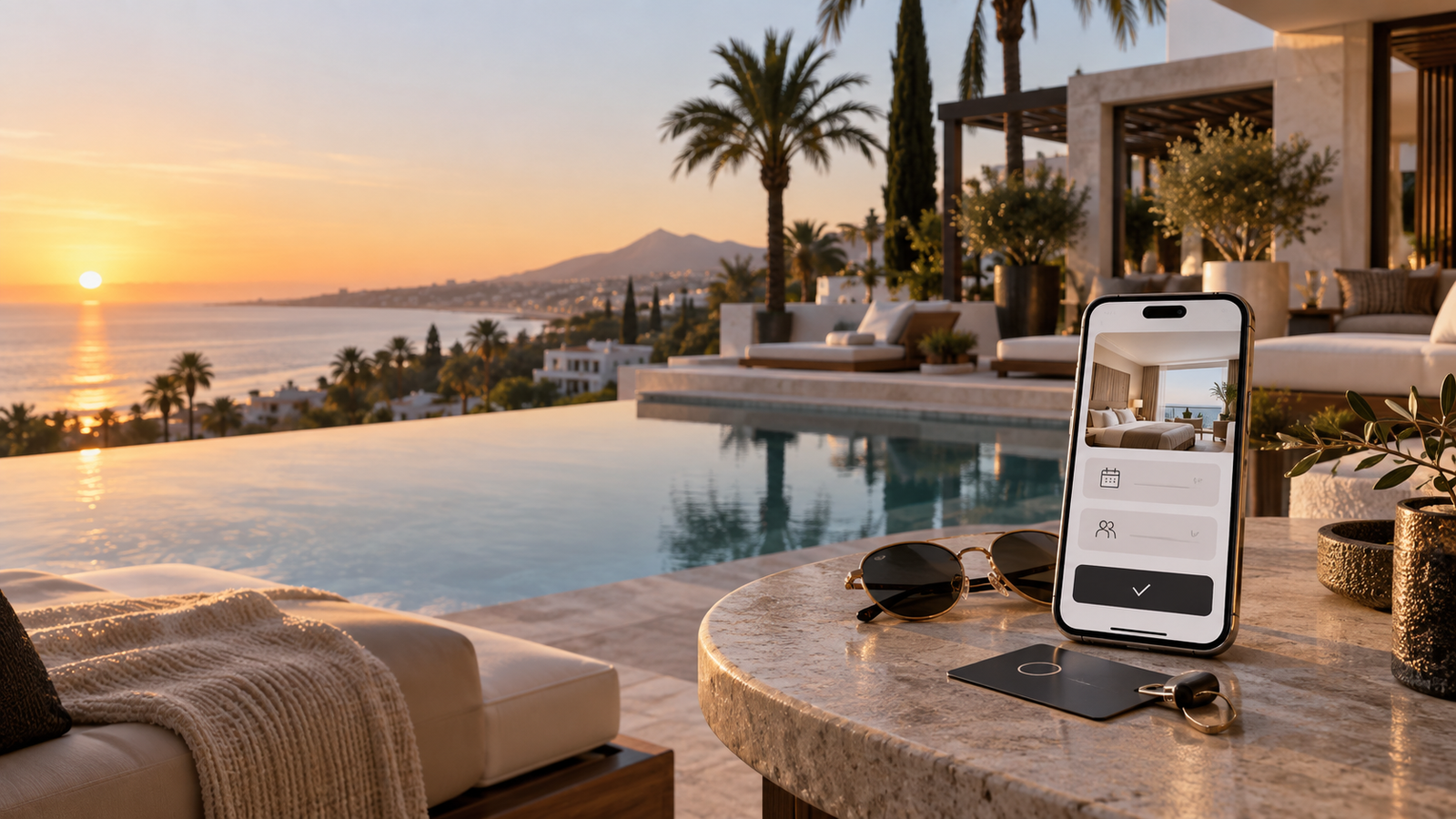
A hotel does not sell a room: it sells the version of Marbella that the guest expects to live. The brand, the content, and the booking experience must uphold that promise.
01
It occupies a clear place in the guest's mind
Luxury, boutique or lifestyle are categories, not positions. Define the experience that only that guest can have in your property and surroundings.
The narrative must adapt to markets and languages without losing its recognizable identity.
02
Design the entire decision journey
Social inspiration, search, comparison, reviews, the web and booking engine form a single journey. It audits the continuity between each step.
Quickly determine location, rooms, services, cuisine, policies and reasons to book directly.
03
Produce to sell an accommodation, not an inventory
Rooms and a pool are essential, but not enough. The content must showcase arrival, tomorrow, gastronomy, well-being, the environment, and service so that the guest can anticipate their experience.
Plan for each season and market. The same production must generate campaigns, websites, social media, press, CRM, and marketing materials without losing consistency.
04
Combines brand and performance
Content and PR build desire; SEO captures searches; campaigns activate markets and dates; retargeting recovers intent.
Don't measure each channel as an island. The guest can discover it on Instagram, search for the brand, and book it days later.
05
Reputation and experience should close the circle
Reviews reveal which promises are fulfilled and where there is friction. It classifies patterns by market, season, and hotel area to turn opinion into decisions.
Responding well protects trust, but the real work happens when marketing and operations address the underlying cause repeatedly.
06
The CRM turns a stay into a relationship
It segments by origin, reason, dates, room type, preferences and behavior, always with consent and responsible data management. A local getaway guest doesn’t need the same message as an international family.
Design communications that add value before, during, and after the stay: trip preparation, relevant experiences, improved booking, gratitude, and real reasons to return.
Automation should support hospitality, not replace it. A large database of impersonal messages can erode the perception that took so long to build.
07
How to prioritize a 360-degree hotel strategy
First, fix conversion and measurement: web, engine, direct bid and attribution. Then create content and pages that can present the experience. Only then scale campaigns so you don't pay to send more traffic to a weak journey.
It works across markets and seasons with a shared calendar between marketing, revenue, sales, and operations. Availability and margin should influence the investment, not arrive as information when the campaign is already active.
IN PRACTICE
Base: brand, website, engine, and analytics
Demand: SEO, content, campaigns, and PR
Relationship: CRM, reputation and repeat business
07
It gives real value to direct booking
The advantage doesn't always have to be price. Flexibility, experience, a welcoming touch, or priority access can protect margins and strengthen the brand.
It analyzes abandonment, acquisition cost, repetition, and market value to decide on an investment.
08
Checklist before starting
CHECK THESE POINTS
- Defined hotel positioning
- Directly visible reservation proposal
- Audited website and booking engine for mobile
- Content by experience and season
- Market and language plan
- Connected campaigns and CRM
- Shared reputation with operations
Direct booking is won when inspiration, confidence, availability, and value appear in the right order.
